1969 words
sans-serif
16px
Paragraph
Default
Creative marketing ideas for small business only work when the right people can actually find them.
Too many small businesses chase clever ideas, trendy tactics, or fun content — only to see no traffic, no leads, and no consistency.
The problem isn’t creativity.
It’s missing foundations.
If you’re a service-based business owner, the goal isn’t to be clever. It’s to be clear, searchable, and useful.
That’s what this guide will show you.
Let’s fix that.
Key Takeaways (Read This First)
Creative marketing only works if people can find it
You can have the smartest, funniest, most creative idea in the world — but if it doesn’t show up in search, it’s invisible. It’s like smiling in the dark. It might feel good, but no one sees it.
Value beats clever every time
Clever headlines and cute wordplay don’t help customers who are searching for answers. Clear, helpful content wins because it matches what real people actually type into Google.
Most small businesses are missing basic SEO foundations
Before trends, hacks, or “creative” ideas work, your website needs to tell Google who you are, what you do, and why you should be trusted.
Consistency matters more than volume
You don’t need to post everywhere or all the time. You need a system you can stick to — even when you’re busy.
You don’t need more ideas — you need a plan
Ideas without structure create burnout. A simple plan turns a few good ideas into steady results.
Who This Is (and Isn’t) For
Before we go further, let’s get clear.
This guide is for:
- Service-based businesses (B2B or B2C)
- Businesses that sell expertise, time, or solutions
- Owners who answer questions on sales calls every week
- Businesses that want marketing to drive trust and leads
This guide is not for:
- Retail or ecommerce businesses focused on products
- Businesses chasing viral trends or short-term hacks
- Anyone looking for gimmicks instead of strategy
If you’re a service business, you have a massive advantage when it comes to content — because your customers are constantly asking questions. That’s where creative marketing actually works.
Why Most “Creative Marketing Ideas” Don’t Work
Here’s what I see all the time.
A business owner tries something creative:
- A fun Instagram post
- A clever slogan
- A trendy video idea
And then… nothing happens.
No traffic.
No leads.
No momentum.
Why?
Because the foundation is missing.
Many small businesses:
- Don’t have a Google Business Profile
- Haven’t clearly told Google what they actually do
- Publish content that can’t be found in search
If Google doesn’t know your website exists, what you offer, or whether it can trust you, it doesn’t matter how creative you are.
That’s where the basics come in.
The Big 3 SEO (And Why They Work Together)
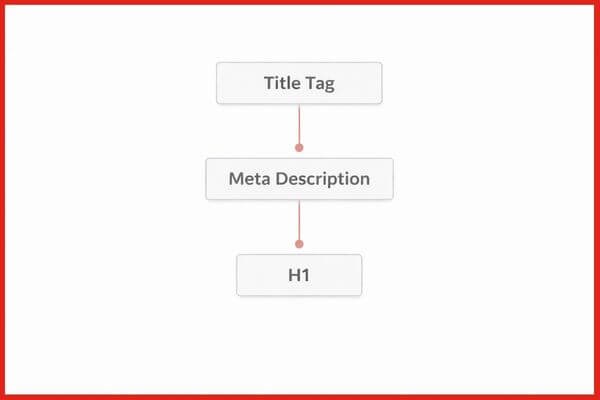
I call it The Big 3 SEO:
- Title tag
- Meta description
- H1 (main page headline)
These three are not meant to repeat each other word for word. They work together.
Think of them like a team.
- The title tag tells Google what the page is about and heavily influences rankings.
- The meta description convinces a human being to click.
- The H1 confirms they’re in the right place and helps Google understand the main topic.
Let’s use this page as an example.
- Title tag: Creative Marketing Ideas for Small Business That Actually Get Found
This clearly matches what people search. - Meta description: Explains why this page is different — not just ideas, but ideas that get found.
- H1: Creative Marketing Ideas for Small Business (That Actually Get Found)
Similar, but written for humans.
Same topic. Different jobs. Stronger together.
Miss one of these, and the whole page gets weaker.
You can write great content, but if these aren’t aligned, you’re smiling in the dark.
Creative vs. Valuable: Why “Being Creative” Can Hurt Your Marketing
I know.
This article is about creative marketing ideas.
So here’s the counterintuitive truth:
👉 Being creative in the wrong way will hurt you.
Google doesn’t reward clever.
It rewards clear.
Here’s a quick comparison.
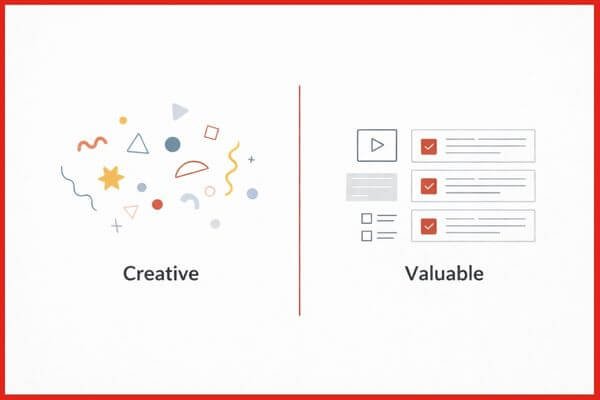
Creative, but invisible:
“Marketing Magic That Makes Your Brand Sparkle ✨”
Sounds fun. Nobody searches for it.
Valuable, and searchable:
“Creative Marketing Ideas for Small Business”
Not flashy. But people actually type this into Google.
That’s the difference.
Real creativity is knowing how to explain what you do:
- Simply
- Clearly
- In plain language
That’s what gets found.
Creative Marketing Ideas for Small Business That Actually Work
This is where most articles stop at surface-level ideas.
We’re going deeper.
The goal here isn’t to give you more things to try. It’s to help you understand why certain creative marketing ideas for small business work — and why others quietly fail.
When you understand the why, you can adapt these ideas to your business instead of copying tactics that don’t fit.
These ideas work because they’re built on value first — not gimmicks.
1. Answer the Questions Your Customers Ask
This is the most powerful form of creative marketing for small businesses — and it’s usually the most underused.
Your customers are already telling you exactly what content to create. They do it on sales calls, in emails, and even in casual conversations.
They ask things like:
- How much does this cost?
- Is this right for me?
- What are the problems or downsides?
- How does this compare to other options?
When you turn these questions into content, a few important things happen.
First, Google understands exactly who your content is for.
Second, prospects feel like you’re reading their mind.
Third, your sales conversations get shorter — because people show up educated.
This works because it’s valuable first, creative second.
You’re not trying to entertain strangers. You’re helping future customers make a decision.
This is the most powerful content you can create.
Your customers are already asking:
- How much does this cost?
- Is this right for me?
- What are the downsides?
- How does this compare to other options?
When you turn these into blogs, videos, or Google Business Profile posts, you build trust before someone ever contacts you.
That’s creative marketing with purpose.
2. Get the Foundations Right Before the “Fun Stuff”
This is where most small businesses get stuck.
They want to jump straight to:
- Social media trends
- Reels and short-form video
- Clever campaigns
But without foundations, none of that compounds.
Before you worry about creativity, your site needs:
- Core service pages that explain what you actually do
- Clear H1s that match real search terms
- Pages that Google can confidently understand and trust
I know a web designer who has built hundreds — maybe thousands — of websites.
Almost none of them had The Big 3 SEO set up correctly.
Not because the designer was bad.
But because business owners didn’t know to ask.
That’s an important lesson.
Most marketing problems aren’t caused by bad effort.
They’re caused by missing fundamentals.
Before trends, make sure you have:
- Core service pages
- Clear H1s
- Pages that explain exactly what you do
I know a web designer who has built hundreds — maybe thousands — of websites.
Almost none of them had The Big 3 SEO set up correctly.
Not because the designer was bad.
But because business owners didn’t know to ask.
You don’t know what you don’t know.
3. Repurpose One Idea Everywhere
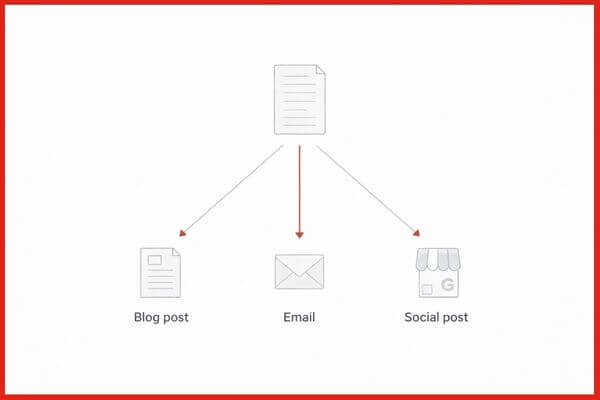
Consistency is one of the biggest advantages a small business can have.
It’s also one of the hardest things to maintain.
The mistake most people make is thinking consistency means more content.
It doesn’t.
It means getting more mileage out of one good idea.
One solid piece of content can become:
- A blog post that ranks
- An email that educates your list
- Several social posts
- A Google Business Profile update
This approach does two things.
It reduces overwhelm.
And it trains Google to see your business as active and relevant.
That’s creative marketing that actually fits real life.
Consistency doesn’t come from doing more.
It comes from doing less, better.
One solid idea can become:
- A blog post
- An email
- A few social posts
- A Google Business Profile update
That’s how small businesses stay visible without burning out.
The Real Reason Small Businesses Aren’t Consistent

When I ask business owners why they aren’t consistent with marketing, I hear the same answers over and over:
- “I don’t have time.”
- “I don’t know what to write about.”
- “I don’t understand the technology.”
That’s not laziness.
That’s decision fatigue.
Every time you sit down to create content without a plan, you’re forced to make dozens of small decisions. What’s the topic? Where does it go? Is this even worth posting?
That mental load is why consistency breaks.
A simple framework — tied to real customer questions and supported by solid SEO foundations — removes most of that friction.
When I ask business owners why they don’t post consistently, I hear:
- “I don’t have time”
- “I don’t know what to write about”
- “I don’t understand the tech”
That’s not laziness.
That’s overwhelm.
Without a plan, every post feels like starting from scratch. And that’s exhausting.
The Stuff Most Business Owners Don’t Know to Ask For (But Should)
Most business owners:
- Don’t know what good web design really includes
- Don’t know how SEO actually works
- Don’t know what to ask for from designers or marketers
So they assume content doesn’t work.
It does.
It just needs structure.
When DIY Marketing Stops Making Sense
DIY marketing makes sense in the beginning.
It helps you learn your message. It helps you understand your audience.
But there’s a tipping point.
At some stage, the problem isn’t effort or ideas.
It’s execution.
If you’re spending hours:
- Guessing what to post
- Starting and stopping
- Wondering if it’s even working
That’s usually the signal.
You don’t need more inspiration.
You need clarity, structure, and a repeatable plan.
At some point, ideas aren’t the problem.
Execution is.
If you’re spending hours guessing, starting and stopping, and wondering if it’s even working, you don’t need more inspiration.
You need clarity.
FAQs
What are the best creative marketing ideas for small businesses?
The best ideas are the ones that answer real customer questions, align with search intent, and can be reused across platforms without burning you out.
Do creative marketing ideas work without SEO?
Not long-term. Without SEO foundations, creative ideas rarely compound. They might feel productive, but they don’t build lasting visibility.
How often should a small business create content?
Less often than you think. One strong piece of content per week — or even per month — can outperform daily posting when it’s intentional.
Is creativity or consistency more important?
Consistency wins. Creativity supports it, but consistency is what builds trust with both Google and customers.
Final Thoughts
You don’t need to be everywhere.
You don’t need to be trendy.
And you don’t need 100 new ideas.
You need a few smart, creative marketing ideas for small business — backed by strong foundations.
That’s how you stop smiling in the dark and start getting seen.
Ready for a Simpler Way to Create Content?
If reading this made you realize that ideas aren’t the problem — execution is — you’re not alone.
That’s exactly why I offer a Content Creation Call.
Give me one focused hour, and we’ll map out a full month of content based on:
- What your customers actually search for
- What Google needs to understand your business
- What you can realistically stay consistent with
It’s clarity, not chaos.
Book your Content Creation Call here:
https://adwisecreative.com/content-creation-call
Prefer to DIY (but do it smarter)?
If you’re not ready for a call yet, start with understanding what your customers are actually searching for.
That’s why I created Cracking the Code — a simple guide that shows you how to uncover real search topics your audience cares about.
It’s the foundation behind everything you read in this post.
Grab the free Cracking the Code guide here:
https://ctc.adwisecreative.com/oi-ctc