

"How many blog posts to see results?" - that's one of the top questions I hear from clients almost every week.
Here's the honest truth — the number of blog posts you publish matters less than you think.
Two things outrank quantity every time: consistency and unique value.
Picture two businesses, each with 12 blog posts.
The first owner published twice a week. The second published once a month.
The first owner is well on their way to becoming a dominant force in their niche.
The second owner? Google crawls their new post and goes, "Hey!! Good to see you! Where ya been? How are the wife and kids?!"
It's like they're starting the relationship all over again every single month.
Consistency is everything.
Google notices patterns. When you publish every Tuesday morning without fail, Google starts to anticipate you.
You become a reliable resource — the kind it counts on. That's when things start to move.
Table of Contents
Unique Value: The Thing Nobody Talks About Enough
Regurgitating the same stats and techniques everyone else is publishing makes you an aggregator, not a blogger.
The fastest way to stand out is to inject YOU into everything you write:
- Your experience.
- Your observations.
- Your philosophy.
Stats can be copied. Your perspective can't.
And here's something else nobody tells you: your niche and your site's authority quietly influence how fast your blog gains traction.
A roofing contractor in a small Florida town will see results faster than someone targeting 'marketing tips' nationally — less competition, more specific audience.
And a brand new website starts with zero authority in Google's eyes, which means your early posts are essentially building your credibility from scratch.
That's normal. That's the foundation phase. Don't skip it.
Once your strategy is solid — consistent publishing schedule, unique voice, right niche — that's when tactics start to matter. And the first tactic I'd put in every blogger's toolkit costs exactly $0.
The $0 Tactic That Changed Everything For Me
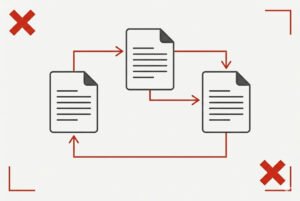
Internal linking.
This sounds technical, But It isn't. Internal Linking means adding links within your blog posts to other relevant posts on your site. Simple. Free. Powerful.
Here's the best way I know to explain it:
'I'm lovin' it.' 'Just do it.' 'When it absolutely, positively has to be there overnight.' You knew those brands before I finished the sentence.
That's what internal linking does for your website. McDonald's doesn't run one spot and call it a day. Every ad reinforces the same brand identity — same jingle, same voice, same feeling — but with a different message each time. Google is the listener. And when your blog posts link to each other, Google hears the relationships, understands your expertise, and starts to build a picture of who you are and what you stand for.
That's not just SEO. That's brand building. And it costs you $0.
I blogged consistently for months and barely moved the needle. Then I started internal linking — and something clicked. The trend started moving. Not overnight. But it moved.
You can reduce how many blog posts to see results by adding internal linking as soon as possible.
I had almost 50 posts before I started. I'm sure I could've started linking much sooner - you can too.
Your Blog Doesn't Stop Working When You Do

Here's what nobody tells you about blogging: it doesn't stop working.
Run an ad and it works until you stop paying. The moment the money stops, so does the traffic. But a blog post? It runs constantly, forever, for as long as it's posted — and you never pay for it again.
There's a pool company outside Washington D.C. that published a blog post in 2008 asking 'How much does a fiberglass pool cost?' That post is still ranking. Still bringing in customers. The owners have attributed millions of dollars in revenue to one blog post that has been working on its own for nearly 20 years.
That's not marketing. That's an asset. (Which also comes in handy when you're ready to sell the business - but that's another discussion.)
The Content Calendar (Or: How to Stop Being a One-Trick Pony)

A content calendar sounds intimidating. Mine usually lasts until I forget where I saved it. 😄
But here's the simple version that actually works: rotate your topics.
Don't talk about SEO for six weeks straight. Mix it up. Write about what things cost — people are always searching for pricing. Write about common problems your clients run into. Compare your approach to the alternatives. Share what's working and what isn't. Introduce people to tools and resources you actually use.
The same rotation works across multiple topics too. One week blogging, next week video, next week SEO. Your content calendar doesn't have to be complicated — it just has to keep you from becoming a one-trick pony.
Google rewards variety. So does your audience.
And if you lose your content calendar? Start a new one. I won't tell anyone.
Searchers vs. Scrollers: Two Audiences, One Blog Post
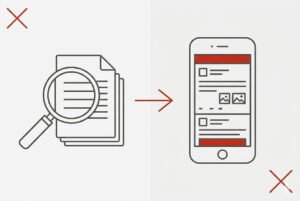
Your blog serves two completely different audiences.
Searchers — people actively typing questions into Google. Your blog is built for them. It answers their questions, shows up in results, and brings them to you.
Scrollers — people mindlessly moving through their social media feed who had no idea they needed you until you showed up. Social media is built for them.
One blog post, written once, serves both audiences. Post it on your website for the searchers. Pull a quote, a stat, a quick tip, or a question from it and post that on social for the scrollers. A few extra minutes of work, a completely new audience, zero additional cost.
This is a Level 2 move — once you're blogging consistently, start repurposing. You're not creating new content. You're extending the reach of what you already wrote.
And when you're ready for Level 3? That's where 'you give me an hour and I give you a month' comes in — but that's a conversation for another day.
When Do Blog Posts Start Showing Results?
The honest answer to how many blog posts to see results is this: It depends less on the number than you think.
Blogging isn't like math.
It's more like — if you have 4 pencils and I have 7 apples, how many pancakes will fit on the roof? It can feel that arbitrary sometimes.
Here's my real answer: I blogged consistently for months and barely moved the needle. Then I started internal linking and something clicked with Google. The trend started moving.
But here's what I want you to understand — the stuff you're creating TODAY is the foundation for that upward trend. Those early posts aren't wasted. When your numbers start to rise, they ALL rise. Every post you wrote in month one gets a second wind when Google finally decides to trust you.
Blogging is the long game. Watch your data at monthly intervals — not daily, not even weekly. Daily data will drive you crazy. Monthly data tells you where you're actually going.
Spikes happen. Don't celebrate them too early. A spike isn't a trend. A trend is what happens when you stack the deck in your favor — consistent publishing, unique voice, internal linking, right keywords — and you give it time.
You can't rush it. But you can absolutely accelerate it.
The Three Biggest Blogging Mistakes I See Service Businesses Make
1. Writing about your business instead of your client.
Your blog is not a brochure. Nobody is searching Google for how great you are. They're searching for answers to their problems. Write about THEIR world — their questions, their frustrations, their goals. You show up as the expert by solving their problems, not announcing your credentials.
2. Inconsistency.
We covered this. Google has a long memory. So do your readers. Show up on schedule or don't show up at all.
3. Wrong scope.
Some bloggers try to cover everything in one post and disappear down rabbit holes that lose the reader entirely. Others barely scratch the surface and leave the reader with more questions than answers. Give people exactly what they came for — no more, no less. One topic, covered completely, done well.
Ready to Start Blogging But Not Sure What to Write About?
You realize how many blog posts to see results is almost irrelevant.
You're ready to start blogging!
"But what do I write about?!"
That's the roadblock I hear more than any other. Now you know blogging matters. You know consistency matters. But staring at a blank screen wondering what your clients actually want to read about — that's where most people get stuck and quit.
I put together a free guide called 'Cracking the Code: 3 Ways to Figure Out What Your Clients Are Googling.' It covers exactly how to find the topics your audience is already searching for — so you're never guessing again.
No fluff. No $2,000 agency jargon. Just three techniques you can use today.
→ Download Cracking the Code for free
Nic Natarella is the founder of AdWise Creative and has spent over 35 years in marketing, advertising, and radio production. He helps service businesses get found on Google, build their audience, and grow their revenue — starting free and scaling with their cashflow. Learn more at adwisecreative.com.